


How to Recognize a Solid Wood Table: 5 Details to Look For

When searching for a wooden table online or in a store, one of the most common questions is: “Is it really solid wood?”
In recent years, the term “solid wood” has often been used generically, creating a great deal of confusion. In reality, there are significant differences between a genuine solid wood table and a product made from engineered panels or veneered materials.
Here are 5 details that will help you identify an authentic solid wood table.
1. The grain patterns are natural and unique
The first detail to look at is the wood grain.
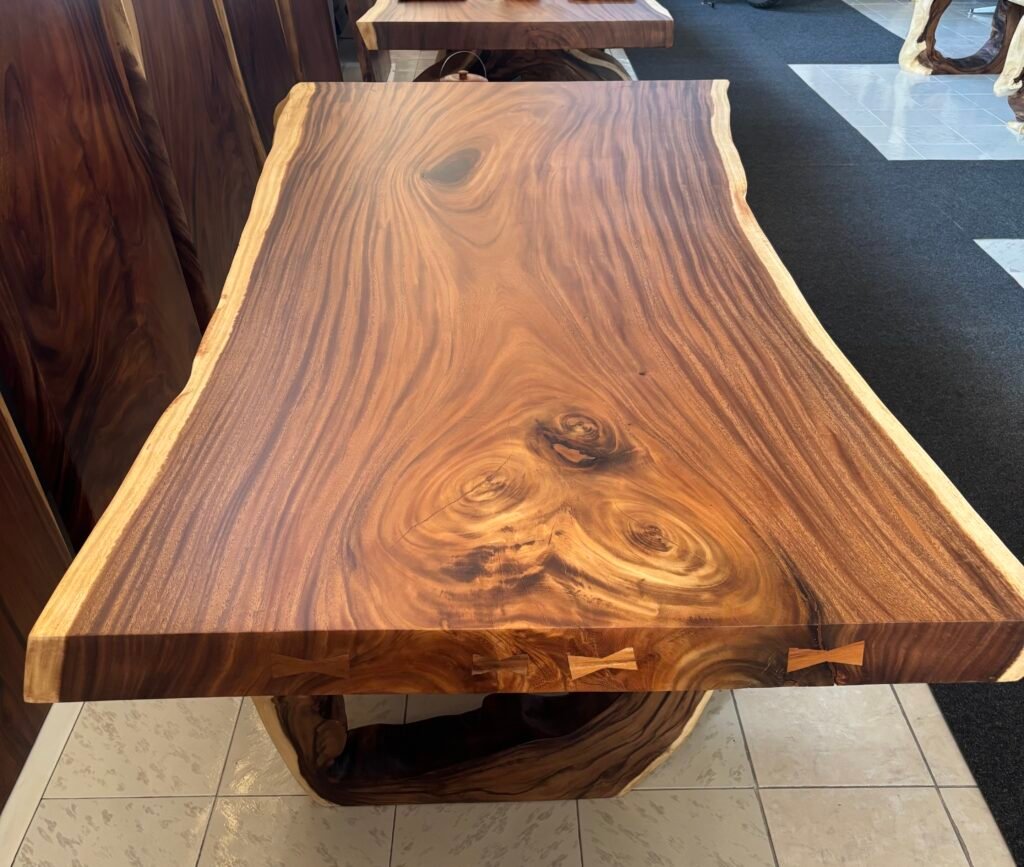
In a table crafted from a genuine solid wood slab, the grain flows naturally, with patterns, variations, and subtle color changes that tell the story of the tree.
Each piece is different from the next.
If, on the other hand, the wood pattern appears too perfect, repetitive, or identical across the entire surface, it may be a veneer or a printed decorative finish.
2. The edges tell the story of the tree
In tables with a natural edge (live edge), the profile follows the original shape of the trunk.
Curves, slight undulations, and natural imperfections in the wood are not flaws, but characteristics that make each table unique.
A perfectly uniform edge, identical along the entire length, is often a sign of industrial manufacturing.
3. The thickness is real
Many tables on the market appear to have a substantial thickness, but they are often a lightweight structure or a veneered panel.
In a genuine solid wood table, the thickness is real and visible along the entire edge.
The weight of the table itself is a consequence of the amount of wood used.
4. Small imperfections are a sign of quality
Knots, color variations, slight natural cracks, and tonal changes are part of the nature of wood.
Each tree grows differently, and these characteristics make every table unique and unrepeatable.
A completely uniform surface, identical in every point, rarely has the charm and authenticity of genuine solid wood.
5. There is craftsmanship behind it
A genuine solid wood table is not born on an assembly line.
Each piece goes through several stages of craftsmanship:
- selection of the wood planks
- sanding
- surface inspection
- protective finishing
- assembly
- preparation for delivery
This requires time, experience, and attention to detail.